Content marketing for ERP consulting firms: the pieces your competitors can’t copy.
ERP is bought by a committee over most of a year. We sit down with your consultants once a month and turn what they know into the cost guides, comparison pages and case studies that committee is looking for.













Most content advice was written for products people buy in a week.
Publish every week, chase keywords, gate an ebook. ERP firms that follow that playbook end up with traffic that never converts, because it ignores three facts about this buyer.
Pick a headline and see how it holds up with an ERP buyer.
- Is it deep enough to trust?This buyer is researching a decision that could end careers. Shallow content damages trust.
Five points every vendor brochure already makes.
- Is it written for someone on the committee?A committee buys ERP. Content aimed at a generic decision maker convinces nobody in particular.
Nobody on the committee is asking this question.
- Will it still matter in month eight?The research runs for most of a year. Content has to be a steady presence, not a single conversion.
Read once, if at all, then forgotten.
0 of 3Shallow, aimed at no one, and forgotten in an hour.
- Is it deep enough to trust?This buyer is researching a decision that could end careers. Shallow content damages trust.
Too wide to go deep on any one kind of manufacturer.
- Is it written for someone on the committee?A committee buys ERP. Content aimed at a generic decision maker convinces nobody in particular.
A whole sector is still not a person.
- Will it still matter in month eight?The research runs for most of a year. Content has to be a steady presence, not a single conversion.
Guides do get revisited, if someone keeps them current.
1 of 3Better. It still loses to three pieces written for one kind of manufacturer.
- Is it deep enough to trust?This buyer is researching a decision that could end careers. Shallow content damages trust.
It names the requirement and what it does to scope.
- Is it written for someone on the committee?A committee buys ERP. Content aimed at a generic decision maker convinces nobody in particular.
The CFO gets the cost. Operations gets the timeline.
- Will it still matter in month eight?The research runs for most of a year. Content has to be a steady presence, not a single conversion.
It is the page a champion forwards when the budget question comes up.
3 of 3This is the one a food producer’s committee reads, forwards and comes back to.
of B2B marketers say their marketing was highly effective last year. Most of what gets published does not do its job.
of the marketers who call their work effective credit the relevance and quality of the content. No other factor is named more often.
name accuracy as a challenge with AI-written content, and 52% name brand voice. Generic is cheap now. Specific is not.
Map content to the committee, not the funnel.
The funnel assumes one person moving through stages. ERP has a whole committee moving in loops, and every seat researches a different question. Pick a seat.
“What will this really cost, and what did companies like ours spend?”
Reads about total cost, ROI timelines and the risk of a budget overrun.
What we write for that seat- Cost guide with honest ranges and cost driversCost
- What comparable companies spent, from your own projectsProof
- Where budgets overrun, and how you stop itRisk
How it reaches themSearch and AI answers first. Later, whatever the champion forwards.
“How does it connect to what we run, and what will it ask of us after go-live?”
Evaluates integration architecture, security posture, data migration risk and the upkeep.
What we write for that seat- Integration guide for the systems your clients runTechnical
- Data migration: what breaks and how you plan for itRisk
- Life after go-live: admin, support and upgradesTimeline
How it reaches themSearch, technical communities and the links your consultants share.
“What happens to our daily work, and how long will it hurt?”
Reads adoption stories, timeline realities and what a normal day looks like after go-live.
What we write for that seat- Week-by-week implementation timelineTimeline
- Adoption story from a team like theirsProof
- What the warehouse floor does differently on day oneUse case
How it reaches themTrade publications, industry communities and LinkedIn.
“What can I forward upward to get this project approved?”
Needs ammunition: pages that make the case to people who were not in the room.
What we write for that seat- Honest comparison page for the shortlistComparison
- Case study with numbers a CFO acceptsProof
- One-page summary of cost, timeline and riskSummary
How it reaches themYour sales team sends it. The champion forwards it.
A complete content program covers all four seats. Most ERP blogs cover none, because they write about the software instead of the decision.
ERP content types, ranked by pipeline impact.
Not all content earns equally. This is the order we work in, from years of watching what ERP buyers read before a deal closes.
- 1
Comparison and alternative pages
Platform against platform. Your firm against the vendor’s own services team. Alternatives to a system the buyer already resents. The searcher has a shortlist and is finishing it.
- Platform A vs platform B for distributors
- Partner or the vendor’s services team?
- Alternatives to the system they have outgrown
- 2
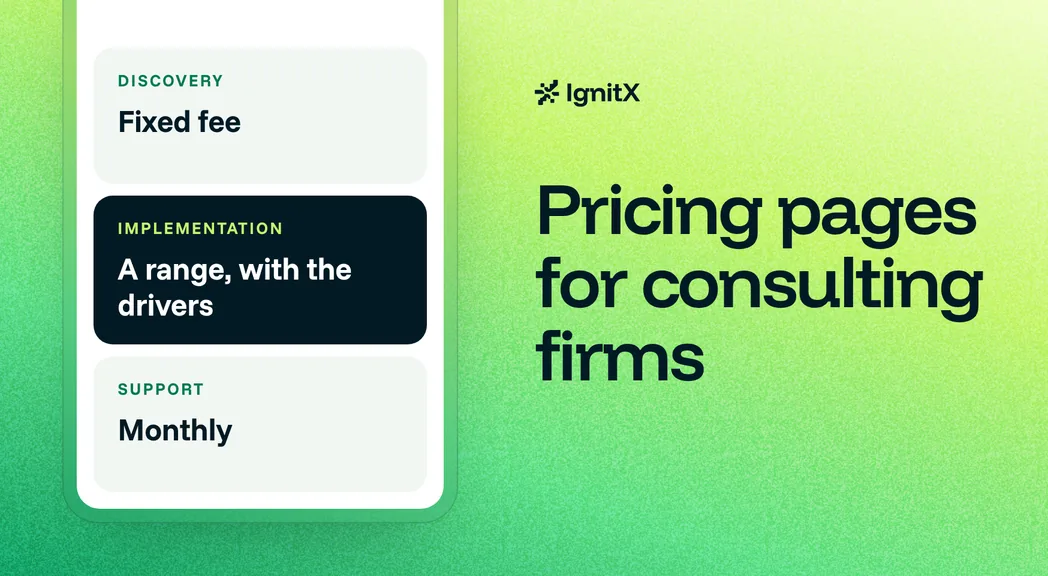
Cost and timeline transparency
Every committee asks what it costs and how long it takes, and almost every firm refuses to answer in public. Honest ranges and week-by-week timelines win those searches nearly unopposed, and AI tools quote them constantly.
- What an implementation costs, with ranges
- What drives the price up
- Week-by-week timeline
- 3
Failure and rescue content
Why projects fail, how to spot a stalling implementation and what rescue involves. It reaches the most motivated buyers in the market, and it earns a trust no promotional page can, because you are telling the truth about your own industry.
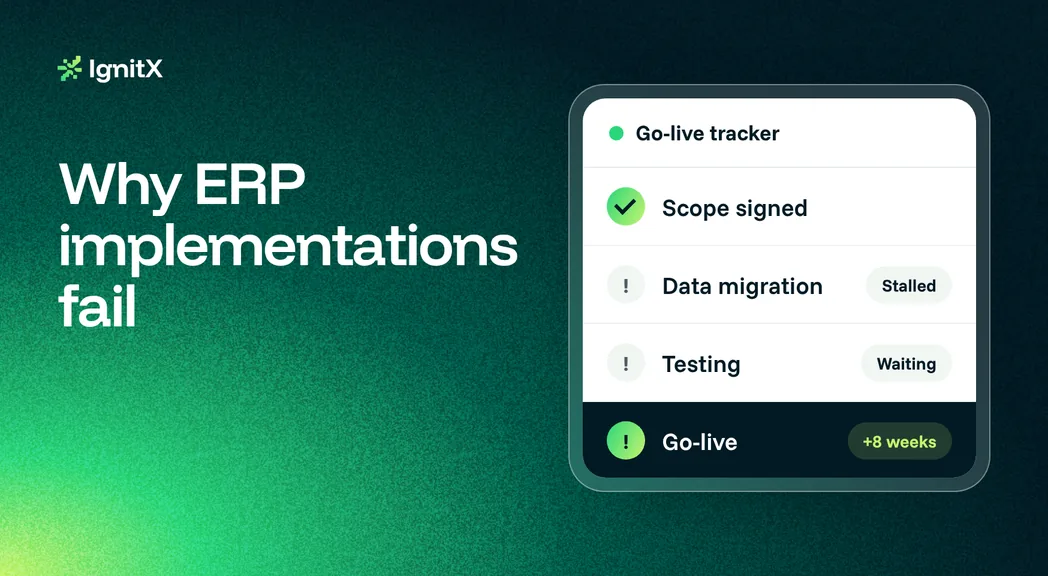
- Why implementations fail
- Signs a go-live is stalling
- What a rescue project involves
Still useful. Just not where you start. Why bottom-of-funnel comes first
Your competitors can copy your topics. They cannot copy your projects.
Every delivery cycle produces raw material. A monthly hour with your delivery leads gives us more original ideas than any keyword tool.
“The migration that surfaced ten years of duplicate customer records.”
“The workaround our client’s controller invented to get through month end.”
“The customization request that turned out to be a broken process.”
- 01
One hour a month
We interview your delivery leads about the projects in front of them. They talk. We record.
- 02
We write it
A writer who knows ERP drafts the piece, answer first, with the numbers and names from the call.
- 03
Your consultant checks it
A short review to confirm the facts. Nothing is published without that sign-off.
- 04
Publish, share, refresh
It goes live, gets packaged for LinkedIn, email and your sales team, and is updated when the facts change.
Depth in one vertical beats breadth across ten.
Ten articles about ERP for manufacturing lose to three about ERP for food producers with lot traceability requirements. Depth convinces the reader you have done their exact project.
So we pick the one or two micro-verticals where your delivery history is strongest, write the cost guide, the implementation timeline and the failure-modes piece for that vertical, and only then move to the next.
Sequential depth builds a set of moats. Simultaneous breadth builds a puddle.
| Vertical oneFood producers with lot traceability | Vertical twoYour next strongest | Vertical threeThe one after | |
|---|---|---|---|
| Cost guide | Published | Published | Later |
| Timeline | Published | Drafting | Later |
| Failure modes | Published | Next | Later |
One vertical finished before the next one starts.
Twelve good pieces in a year beat fifty-two blog posts.
The volume is modest. The selection is everything. This is the order we would publish in for a typical firm, with each piece aimed at one committee member, one trigger or one search.
- Q1Answer what every committee asks
- Cost guideCFO
- Implementation timelineOperations
- First honest comparison pageShortlist
- Q2Say what nobody else will
- Why projects failRescue
- How to spot a stalling implementationRescue
- What a rescue looks likeRescue
- First micro-vertical deep diveVertical one
- Q3Go deeper
- Second micro-vertical deep diveVertical two
- Two stories mined from your delivery teamProjects
- Refresh the Q1 pagesRefresh
- Q4Close the loop
- Second comparison pageShortlist
- The year in projects, looked back onProjects
- Full refresh pass so AI tools can cite itRefresh
12 new pieces and 2 refresh passes. A two-person marketing team can run this, and your delivery team will still be speaking to you at the end of it.
Ask what we would publish firstA case study should read as a story, not a trophy.
Buyers do not shop for trophies. They shop for proof that you have already survived their exact situation. Every case study we write follows six parts, and the shape does the persuading.
- 1
The snapshot header
The scan evaluators came for: industry, size, systems replaced, timeline. It is what gets a case study forwarded to the CFO.
- Industrial distributor
- 58 million dollars in revenue
- Replaced QuickBooks and three warehouse spreadsheets
- Nine months
- 2
The mess before
Real texture, so the right reader recognises their own situation.
A 22-day close. Inventory accuracy sitting at 71 percent. Lead times quoted from a spreadsheet nobody trusted.
- 3
Why they chose you
Claims you make about yourself are advertising. The same words from a client are evidence.
“We talked to three partners. These were the only ones who asked about our rebate program before quoting.”
- 4
What the work looked like
Include the moment it got hard. A frictionless story reads as fiction.
Data migration surfaced 4,000 duplicate SKUs, so we paused, ran a two-week cleanse with their ops team, and re-planned the cutover.
- 5
Results a CFO cares about
Close the loop on the pains from part two, in numbers, each with its baseline.
- Close time22 days6
- Inventory accuracy71%98%
- Order to ship5 days36 hours
- 6
The human quote
A sentence that sounds like a person. It is usually hiding in the interview recording.
“I stopped checking the inventory report every morning because it stopped being wrong.”
The example comes from our guide. How to write ERP case studies that win implementation deals
Publishing without distribution is journaling.
ERP buyers read in a few places, and the list is shorter than most marketing plans assume. Every piece we write is shaped for each of them before it goes live.

Search
The backbone. ERP research is question-driven, and the questions get typed.

AI answers
Answers cite sources. A direct answer in the first lines, real numbers and fresh pages get lifted.
LinkedIn
Where committee members scroll. Founder-voice posts beat company pages there.

Communities and trade press
Industry communities and trade publications reach the operational roles.

G2 and Clutch
Committees verify you there whether you take part or not.
Your sales team
Every piece is packaged so a rep can send it to answer a live objection.
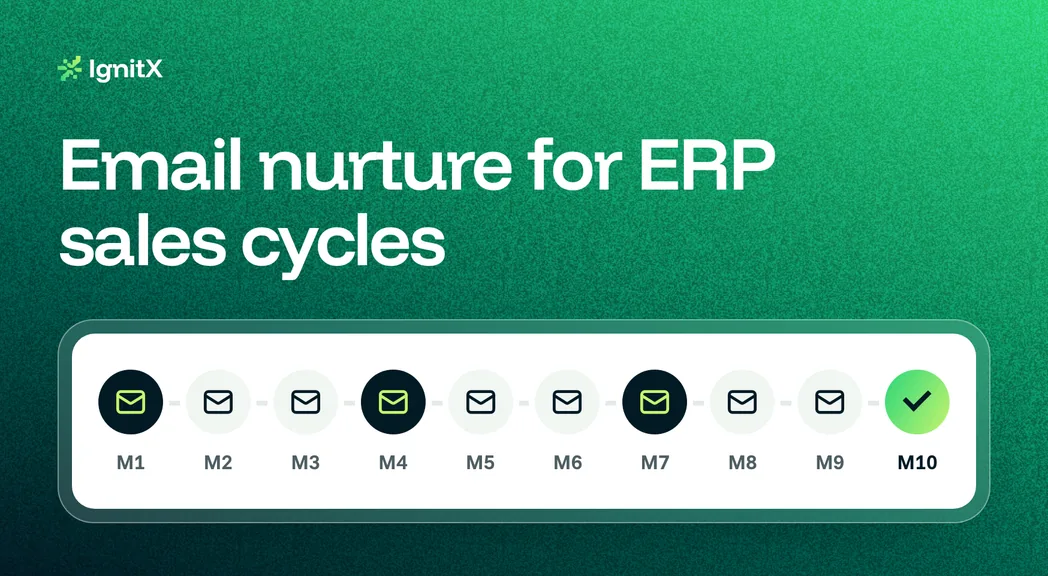
Monthly email
Monthly, useful and specific beats weekly and generic across a long cycle.
Want to be the source AI tools cite?
Citable is a quality you can build into a page. We cover how on the AI search page.
AI Search Visibility
What clients say about our content.

“Zees has both met and exceeded my expectations for an SEO content writer. I would highly recommend Zees to any person or business looking to boost their SEO.”

“Zees played a key role in helping us build topical authority through blog content that supported our SEO strategy. He took the time to understand the subject matter, validated information, and contributed articles that built user trust.”

“Zees has been instrumental in improving SEO and creating industry-specific content. His expertise in the field has resulted in noticeable improvements in website rankings.”
The kind of pieces we mean.
Content for ERP firms, answered.
Something else on your mind? Email zees@ignitx.com and you’ll hear back from Zees directly.
What is content marketing for ERP consulting firms?
It is publishing what a buying committee looks for while it researches a partner: cost and timeline guides, comparison pages, failure and rescue content, case studies and deep dives for one vertical. The goal is pipeline, so every piece is aimed at one committee member, one trigger or one search.
How much content do we need to publish?
Less than most firms think. Twelve to fifteen substantial pieces a year, chosen well, do more than a weekly blog. A lean team can run that.
How much of our consultants’ time does it take?
About an hour a month with your delivery leads, plus a short review of each draft to confirm the facts. We do the research, the writing, the editing and the publishing.
Should we gate our guides behind a form?
Mostly no. Buyers do most of their research on their own before they talk to anyone, and AI tools can only cite what they can read. We keep cost guides, comparison pages and case studies open, and offer the email list as an option beside them.
How do you measure whether content is working?
By conversations. We track which pieces prospects mention on calls, which pages your sales team sends, which enquiries came through them and whether AI tools cite them. Rankings and visits are tracked too, as early signals.
How long before content brings in leads?
Plan in quarters. Comparison and cost pages tend to be found first because the people searching for them are close to a decision. ERP is bought over most of a year, so the full effect of a program shows up over several quarters.
Is content separate from SEO?
They are planned together. Keyword research decides which buyer questions are worth answering, and content is how you answer them. See SEO for ERP Firms for how the two fit.
Which platforms do you write about?
Any ERP ecosystem. NetSuite partners have a page built around their channel: NetSuite Partner Content Marketing.