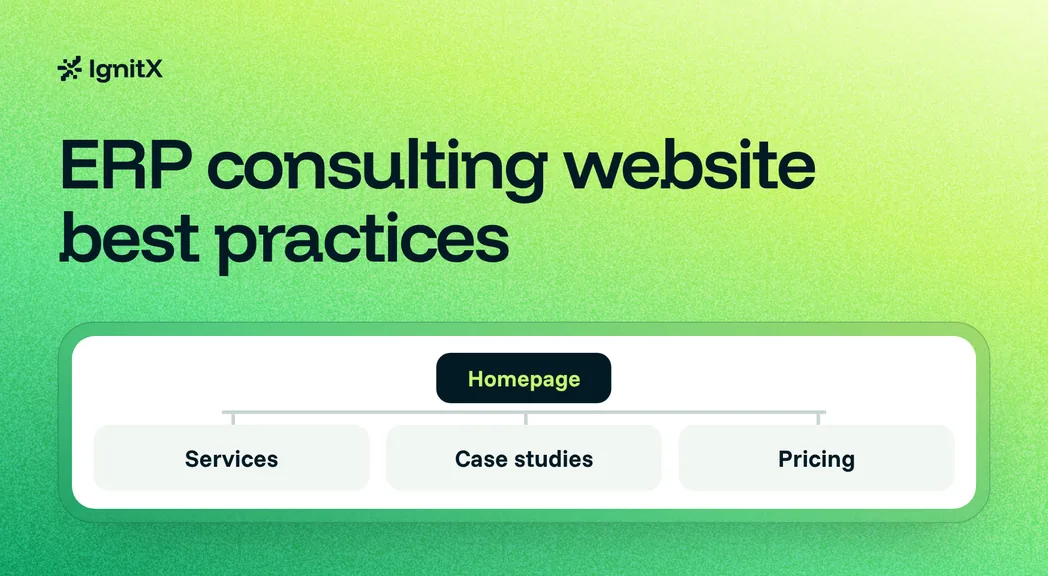
Website design for ERP consulting firms: built to pass the buyer’s background check.
Partners treat the website as a brochure. Buyers treat it as a background check. We design and build sites where a careful buyer can verify everything, and every page answers a question someone actually has.
Case studyMonth-end close14 days3Frozen foods distributor
ERP for food producersLot traceability that holds up in a recall drill.See what it costs
AKRMJSYour consultants, by name4.8on G2Updated Nov 2026
Your firmERP for food producersLot traceability that holds up in a recall drill.Month-end close14 days3See what it costs
A person replies within one business day
Named consultantsMatches LinkedInReviews on G2Third parties agreePassed the checkFirm goes on the shortlist
ERP consulting firms we’ve worked with
The job description
Your website has two jobs. Verification comes first.
By the time an ERP committee contacts a firm, most of the decision has already formed through its own research. The website is where that research survives verification or quietly dies.
Job one
Survive the verification hour
A shortlisted firm gets checked: who works there, what they have delivered, what clients say, whether the practice is alive. The check eliminates firms silently. Nobody emails to say your broken case study link cost you the deal.
Who works there
What they delivered
What clients say
Whether the practice is alive
Job two
Get discovered
Capture the searches that create pipeline you own: trigger events, cost questions, rescue queries and vertical searches.
Trigger searches
Cost questions
Rescue queries
Vertical searches
Discovery gets all the SEO attention. Verification decides more deals. We build for both, in that order.
83%
of B2B technology buyers shortlisted three or fewer options. There is no spare seat for a firm that fails the check.
74%
consulted customer reviews before they bought. What other people say about you is part of the website’s job.
47%
trust what they read online less than they did a year ago. Proof has to be something a buyer can check.
What an ERP firm’s site needs, and what it can lose.
Strip away the template thinking and the list is short. Seven kinds of page do the work.
Homepage
Says who you serve and what you fix in the first screen, in buyer language, not “digital transformation”.
Service pages
One per real search intent: implementation, optimization, integrations, support, rescue. Each carries its own proof.
Micro-vertical pages
One for every vertical you can evidence with delivered work.
Case studies
Treated as a first-class asset: filterable, quantified and linked from the pages they prove.
Team
Named consultants with real credentials. ERP buyers hire people, not logos.
Pricing or cost guide
The highest-intent page on a partner site, and the one most firms refuse to build.
Content library
Cost guides, comparisons and trigger content for the silent research phase.
Leave outA news section of press releasesA values carouselAn About page that opens with the founding year
Buyers skip all three.
Conversion paths
Match the ask to the fear.
Most partner sites offer one door: Contact us. A buyer ten months from a decision does not want a sales conversation. They want the next safe step. Pick a rung.
Reading, not talking
This buyer is building a business case and will not fill in a contact form. Give them something worth reading and keep the door open.
GuideWhat an ERP implementation costs a food producerRead the cost guide
The cost guide
The comparison
The timeline piece
A small, named first step
A first step with a name, a scope and an end date feels safe. “Contact us” does not.
Two weeks, fixed scopeImplementation health checkSee what is included
An assessment
An audit
A scoped workshop
The direct conversation
Now the form matters. It asks for three fields, not ten, and says when a real person will answer.
NameWork emailWhat is going on?Talk to a consultantA person replies within one business day
Three fields, not ten
A named person
A stated reply time
The copy standard
Fear and outcome, not methodology.
The default partner site describes its process. That is a delivery plan, and the buyer is not buying a delivery plan. They are buying relief from three fears.
The budget blows up
So the page shows the range, what moves it and how overruns get caught early.
The team refuses the system
So the page shows how users are brought in before go-live, with an adoption number.
The consultants vanish after go-live
So the page names who stays, for how long and what support looks like.
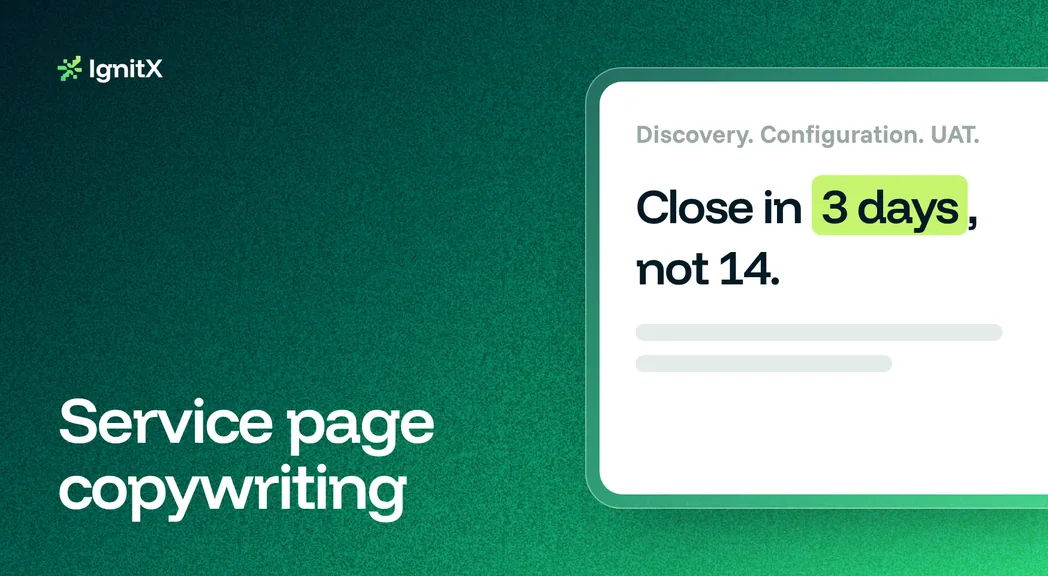
What most sites write
Discovery. Configuration. UAT. Go-live.
Keep the methodology for the SOW.
What we writeExample
Mid-market distributors come to us when close takes two weeks. We rebuild the close inside the system they already own. Ninety days later it takes three days.
A crawl, a Search Console check, a speed check on each template and schema that describes the firm. Most of the channel will not spend the day, which is the opportunity.
The site’s newest visitor is not human. A brochure site is invisible twice.
“Zees is precisely the kind of marketing guy NetSuite firms need. When we revamped the website, he didn’t just “make it look better” he helped sharpen our positioning, and implemented SEO best practices.”
Jaime RequenaFounder, Suite Tooth Consulting
“We contracted Zees to help us build our website for Stockton10. His deep knowledge in NetSuite helped us find the right keywords and also was able to guide us in the proper page design.”
Miguel Dy BuncioFounder, Stockton10
“Zees knows our industry very well and was able to recommend many things that we wouldn't have even thought about. His experience really showed in his recommendations.”
Something else on your mind? Email zees@ignitx.com and you’ll hear back from Zees directly.
What makes an ERP consulting website different from any other B2B site?
The buyer. ERP is a fear purchase made by a committee over most of a year, so the site works less like a brochure and more like a background check. It has to show who works at the firm, what they have delivered and what clients say, in a form a skeptic can verify.
Do we need a full redesign?
Often not. Most of what costs a firm deals can be fixed in about ninety days on the site it already has: broken proof, vague service pages, a missing cost guide, one door for every visitor. We rebuild when the structure or the templates cannot carry that work.
Which pages should we fix first?
The embarrassments first: broken links, placeholder descriptions, dead pages and stale dates. Then the top three service pages and two case studies with numbers. Then the cost guide and the first vertical page.
Should we publish what our projects cost?
A range with the things that move it, yes. It is the highest-intent page on a partner site and most firms refuse to build it, which is why the ones who do get found and trusted. See pricing pages for consulting firms.
How many form fields should a contact form have?
Three, not ten. And the page should say when a real person will reply, and then keep to it. Both are trust signals as much as conversion details.
Will the site be built for search and AI answers?
Yes. The same things serve both: direct answers at the top of sections, specific and current claims, and the firm described the same way everywhere. See SEO for ERP Firms and AI Search Visibility.
Which ERP platforms do you work with?
Any ERP ecosystem. NetSuite partners have a page built around their channel: NetSuite Partner Websites.
Free visibility audit
Run the background check on your own site. Or let us run it.
Tell us your platform and your website. We’ll check it the way a buyer does and send back what fails, what to fix first and how the site shows up in Google and AI search today.
 4.8on G2